
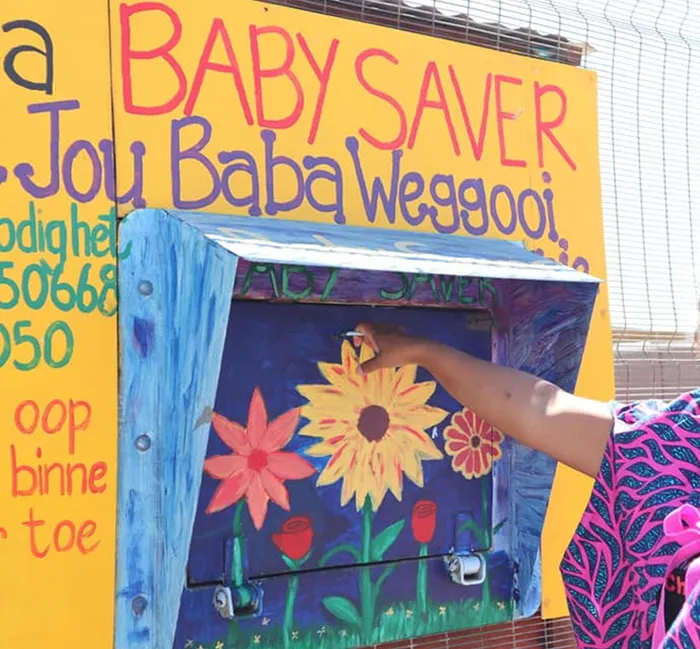
A Baby Saver box allows mothers to safely and anonymously place their babies inside.
Image: File
The lives of babies, whom mothers are unable to care for, could be at further risk if a lifeline offered by organisations who has baby saver boxes on their doorstep, are cut by the government.
These baby saver boxes, are hatches in the doors of these organisations, where mothers can safely drop their babies instead of abandoning them on the street, dustbins or drains. These hatches, once opened immediately triggers an alarm, allowing staff to safely retrieve the child and arrange care.
The organisations Baby Savers South Africa and Door of Hope Children’s Mission, are seeking legal protection after the Gauteng Department of Social Development said their services are contravening the Children's Act by aiding "illegal abandonment".
They've approached the Gauteng High Court this week to challenge the classification of safe infant relinquishment under South Africa’s child protection laws. Proceedings took place from 5 to 7 May and centred around whether the use of baby saver mechanisms should legally be treated in the same manner as child abandonment under the Children’s Act.
This case became particularly relevant this week after two newborn babies were found dumped and deceased in separate incidents in the Western Cape within days of each other.
The Centre for Human Rights, represented by Lawyers for Human Rights, is participating in the matter as a friend of the court.
Deborah Raduba from the Centre for Human Rights, said the case raised broader constitutional questions around dignity, equality and the purpose of the law.
“Where a caregiver takes steps to ensure a child’s safety, the law should recognise that act for what it is. Protecting life cannot be treated as a crime,” Raduba said.
The organisations argued that safe relinquishment mechanisms are often used during periods of crisis and desperation and may prevent unsafe abandonment that could place infants’ lives at risk.
They further contend that criminalising such conduct could deter vulnerable mothers from seeking safe alternatives due to fears of arrest or prosecution.
Sarah Roberts, the Western Cape Commissioner for Children, said safe child relinquishment was a sensitive but urgent issue requiring government attention.
“By formally acknowledging and incorporating measures within the Children’s Act, we can significantly enhance the safety and well-being of both babies and their mothers,” Roberts said.
She added that many mothers facing these circumstances were often young and vulnerable and required compassionate and structured support systems.
Siya Monakali, spokesperson for Ilitha Labantu, said the recent deaths of newborns highlighted gaps in early intervention, access to services and awareness around available safe relinquishment options.
“The absence of clear, regulated frameworks may contribute to uncertainty and limit the availability of safe alternatives to unsafe abandonment,” Monakali said.
He added that child abandonment was often linked to broader socio-economic pressures including poverty, stigma, gender-based violence and limited access to healthcare and social support.
Lucinda Evans, founder of Philisa Abafazi Bethu, said communities and organisations working on the ground were increasingly frustrated by the lack of legal clarity around baby savers.
“I will never, ever be okay with baby dumping. But I am also not okay with the fact that baby savers, which save the lives of babies and children, are not being legalised in our country,” Evans said.
Evans said the organisation supported the ongoing litigation involving Baby Savers South Africa and questioned why safe relinquishment measures had not yet been formally included in the Children’s Act.
She also raised concerns around mental health support, maternal care and whether enough interventions existed for vulnerable mothers before abandonment incidents occur.
Organisations involved in the debate said protecting children and supporting vulnerable mothers should not be treated as opposing objectives, but rather as interconnected parts of a broader child protection response.
Both child advocates and legal organisations involved in the case have called for clearer policy direction, improved public awareness around safe relinquishment options, stronger social support systems and reforms aimed at preventing unsafe abandonment while prioritising the safety and survival of children.
tracy-lynn.ruiters@inl.co.za