
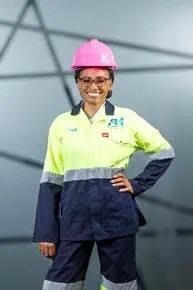
Tshidi Mndzebele, award-winning engineer and CEO of AvenirHoldings
Image: Supplied.
WOMEN remain significantly underrepresented in South Africa’s engineering sector, making up only 16% of registered engineering professionals, according to industry figures cited by award-winning engineer and AvenirHoldings CEO Tshidi Mndzebele.
Mndzebele is calling for more women engineering graduates and practitioners to formally register as professionals through the Engineering Council of South Africa (ECSA), saying registration is critical for career growth, leadership opportunities and industry recognition.
ECSA, which operates under the Council for the Built Environment (CBE), is responsible for regulating engineering professionals in South Africa. Other built-environment professionals, such as project managers and quantity surveyors, may register through different statutory councils under the CBE umbrella.
“Professional registration is not just a title, it is recognition of your expertise, your experience, and your ability to lead within the industry,” said Mndzebele.
She said many women engineers either do not fully understand the benefits of professional registration or are discouraged by barriers that make the process appear inaccessible.
According to Mndzebele, registered professionals often enjoy stronger career prospects, improved credibility, higher earning potential and greater visibility within the industry.
“Registration gives engineering professionals an elevated standing and greater visibility in the industry. It builds credibility with employers, clients, industry stakeholders, and even financial institutions,” she said.
Mndzebele argued that the low number of registered female engineers reflects broader structural challenges facing women in the sector, including limited mentorship opportunities, underrepresentation in senior leadership positions, workplace bias and inadequate support systems.
“South Africa does not lack talented and experienced women engineers. The challenge is ensuring women are supported throughout their careers and encouraged to advance professionally,” she said.
She added that stronger mentorship programmes, greater visibility for female role models and improved industry awareness could help more women navigate the professional registration process and progress into leadership roles.
Mndzebele also warned that the gender imbalance has implications beyond workplace equality, saying it affects innovation and economic growth within the sector.
“Engineering shapes the infrastructure, systems, and innovations that drive our country forward. When women are excluded or underrepresented, the industry loses valuable perspectives, skills, and ideas,” she said.
“Diversity strengthens innovation and leads to better solutions for communities and society as a whole.”
She encouraged young women entering the profession to see professional registration as a long-term investment in their careers.
“There is space for women in engineering — not only to participate, but to lead and influence the future of the industry,” Mndzebele said.
Her comments come amid ongoing national and global discussions around gender representation in science, technology, engineering and mathematics (STEM) fields, where women continue to face barriers to advancement despite growing participation at tertiary education level.