
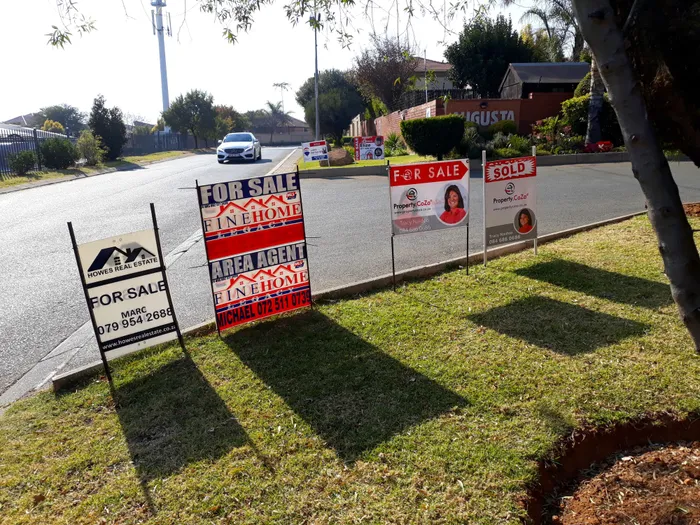
Property industry leaders say the SA Reserve Bank's decision to increase interest rates will increase monthly bond repayments for homeowners, but it is unlikely to fundamentally affect the market.
Image: Karen Sandison | Independent Newspapers
The Reserve Bank of South Africa (SARB) has taken a decisive step towards managing inflation by raising interest rates by 25 basis points, marking a significant turn in a landscape that has remained relatively stable for an extended period. This move arrives during a challenging time for consumers, who are already grappling with elevated costs driven by geopolitical tensions and persistent inflation risks. Oil prices continue to rise, creating additional pressure on household budgets and reflecting ongoing global uncertainties that heavily influence emerging markets.
As the SARB seeks to balance immediate economic demands with long-term stability, the latest interest rate hike resonates deeply within South Africa's properties market, a sector historically sensitive to consumer confidence and macroeconomic indicators. Tony Clarke, Managing Director of the Rawson Property Group, notes that demand and pricing within the property market are tightly bound by factors such as interest rates, economic sentiment, and broader financial landscapes.
Though a 25-basis-point increase may seem modest at first glance, it serves as a stark reminder of the SARB's commitment to managing inflation rigorously. While it poses further strain on South African households, Craig Mott, National Sales Manager at the Rawson Property Group, cautions that such an adjustment does not precipitate an immediate collapse in the housing market.
“Buyers and homeowners have already acclimatised to fluctuating conditions, and this resilience continues to manifest in market transactions,” Mott said. “This adjustment signifies a more cautious approach from the SARB, but it does not automatically translate into a market slowdown.” His observations highlight sustained demand across various property price bands and a consistent influx of first-time buyers motivated by the long-term value of property ownership.
As economic dynamics shift, the upper segment of the property market is anticipated to resist the rate rise more effectively, while more price-sensitive segments are likely to encounter slower momentum due to the increasing pressure on affordability.
Leonard Kondowe, National Manager at Rawson Finance, said the increase in rates needs to be viewed within a larger context of global economic pressures. “While local inflation has stabilised, external risks persist, specifically driven by geopolitical tensions impacting oil prices,” he said. Such pressures inevitably reach into transportation, food prices, and household budgets, urging the Reserve Bank to exercise caution to prevent inflation from escalating unchecked.
For prospective buyers, this translates to a fundamental shift — emphasising the importance of affordability over speculative timing of the market. “It’s crucial to focus on controllable factors like credit health, deposit size, and affordability,” cautions Kondowe. He advocates for prequalification and urges buyers to understand their financial capacity whilst being prepared for potential fluctuations in interest rates. “Preparation fosters flexibility and confidence,” he adds.
Homeowners, on the other hand, are encouraged to engage in proactive financial planning. Kondowe advises, “If you have successfully managed your repayments thus far, consider reassessing your budget to create further breathing room. Small adjustments can yield significant long-term benefits.” Consistency in managing mortgage repayments, even through minor additional payments, can significantly influence wealth creation in property ownership.
Looking forward, despite the inherent challenges within South Africa’s economic climate, Clarke expresses a sense of cautious optimism regarding the property sector's future. “While there are structural challenges to address, an uptick in private-sector engagement in essential services like infrastructure and energy could catalyse growth in housing demand,” he notes. “The decision-making involved in property transactions remains one of the most significant in people’s lives; thus, the human aspect of trust and reliance on professional advisers is paramount in navigating these uncertain waters.”
IOS