
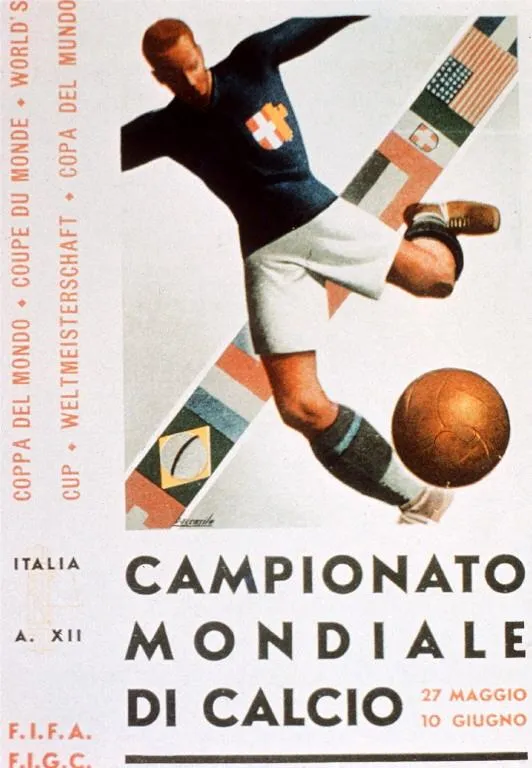
The 1934 World Cup was Mussolini's playground, but it also gave us Africa’s first-ever star on the world stage: Egypt’s Abdelrahman Fawzy. Photo: AFP
Image: AFP
The second edition of the FIFA World Cup in Italy was a controversial one.
Not only did defending champions Uruguay boycott the tournament, but the UK and Ireland continued their self-imposed exile due to the belief that their international matches were "a far better world championship" than what was to be staged in Italy.
Host Italy was hugely problematic, with dictator Benito Mussolini using the event to promote the nation and his ideology of Fascism. To this day, accusations of manipulation and cheating mar this iteration of the tournament.
Mussolini is charged, for example, with personally selecting match officials for the Azzurri’s matches and intimidating the opposition to ensure Italy made it to the final, which they would go on to win.
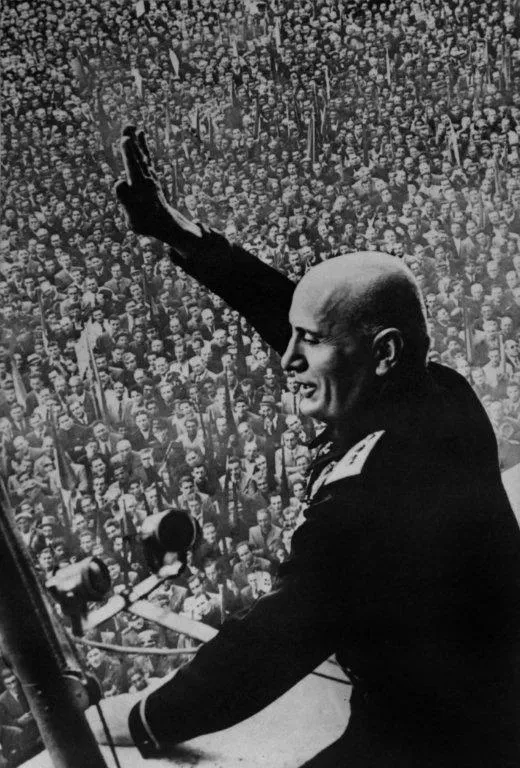
Italy dictator Benito Mussolini. Photo: AFP
Image: AFP
Thirty-two nations entered the tournament, with 16 qualifying for the World Cup Finals. Africa made their first appearance at the World Cup through Egypt.
Africa: Egypt
Europe: Austria, Belgium, Czechoslovakia, France, Germany, Hungary, Italy, Netherlands, Romania, Spain, Sweden, and Switzerland
North America: US
South America: Argentina and Brazil
This World Cup was the first truly all-encompassing tournament with eight stadiums used across Italy for matches.
The final was played at the Stadium of the National Fascist Party, which has since been rebuilt into the Stadio Flaminio. Previously used as a rugby ground, the Flaminio is set to undergo renovation under plans submitted by Lazio.
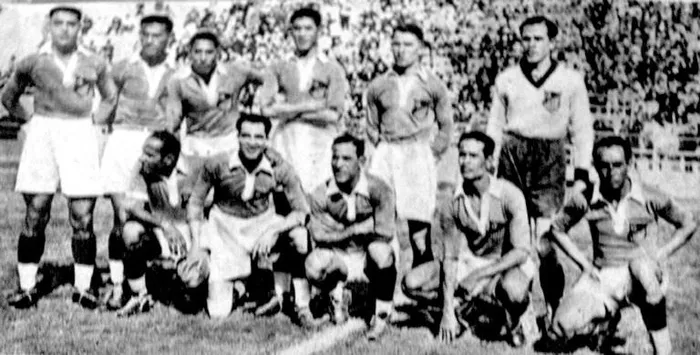
The Egypt team that became the first African nation to participate at the Fifa World Cup. Photo: AFP
Image: AFP
After qualifying for the World Cup, the 16 teams entered a knockout-round-only format. All first-round matches were played on the same day and at the same time on 27 May, with Italy, Spain, Austria, Hungary, Czechoslovakia, Switzerland, Germany, and Sweden progressing to the quarter-finals.
Having made the arduous journey across the Atlantic, the US, Argentina, and Brazil were all dumped out of the tournament on Matchday 1, losing 7-1 to Italy, 3-2 to Sweden and 3-1 to Spain, respectively.
Although they would lose 4-2 against Hungary in the first round, the tournament marked the first participation of an African nation at the showpiece event. Egypt’s Abdelrahman Fawzy became the first African to score a goal at the World Cup when he slotted home in the 35th minute.
He then became the first African to score a brace four minutes later. He would have also been the first African to score a hat-trick, as he netted for a third time after dribbling the ball past the Hungarian defenders from a restart, only for the goal to be ruled offside. No African nation would then participate at the World Cup again until 1970.
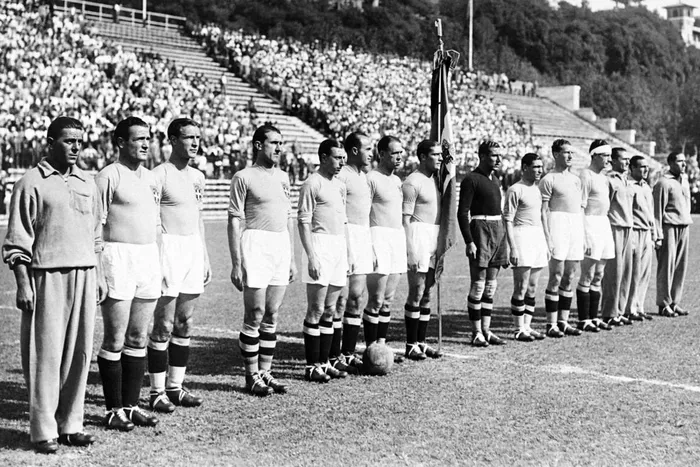
Italy won their first World Cup in 1934, as hosts. Photo: AFP
Image: AFP
All 16 matches were technically knockout matches, but Italy, Austria, Czechoslovakia, and Germany made the last four.
Semi-final 1 (San Siro, Milan): Italy 1, Austria 0
Semi-final 2 (Stadio Nazionale, Rome): Czechoslovakia 3, Germany 1
Germany would go on to win the third-place play-off against Austria 3-2.
Played in sweltering heat in Rome, Czechoslovakia took the lead in the 71st minute through the boot of Antonin Puc. Italy were able to equalise 10 minutes later when Raimundo Orsi scored.
The match, however, went to extra-time in a final for the first time. Italian legend Angelo Schiavio scored the winner in the 95th minute to record the Azzurri’s first World Cup triumph. Despite the allegations of intimidation and cheating, the 1934 and subsequent 1938 teams, both coached by Vittorio Pozzo, are still considered among the greatest the nation has ever produced.
The 1934 World Cup cost approximately R1.4 billion to host with inflation calculated. In comparison, the current edition later this year is expected to cost the US, Canada, and Mexico $13.9bn to host (about R230bn).
Missed our retrospective on 1930, click here to read about the inaugural World Cup.