
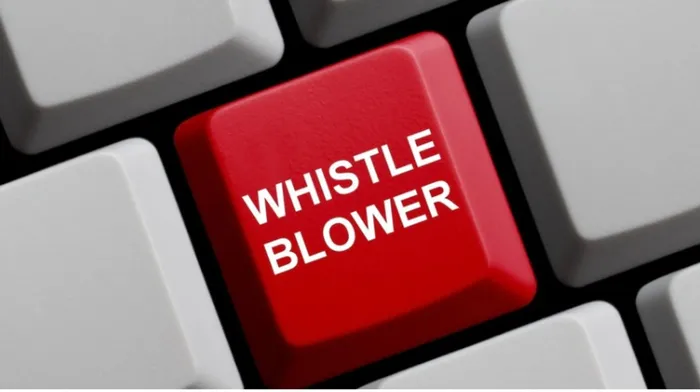
Whistle-blower In a business landscape rife with risks, fostering a culture of transparency and support is a business imperative, and the key to navigating fraud effectively lies within the courage of employees to speak out.
Image: File
When discussions about fraud prevention arise, much of the focus is on technological advancements, robust internal controls, or the role of auditing processes. While these elements are undeniably crucial, they often overshadow the most effective tool an organisation possesses — its people. Elani Vogel, Senior Forensic Manager at Loxton Forensics, emphasises that individuals within an organisation are key activists in uncovering fraud.
A staggering proportion of fraud cases are unveiled not through complex software, but by an observant employee who chooses to speak up. A colleague may spot an unusual transaction, a supplier could question a dubious payment request, or an employee might voice concerns over behaviours that seem to stray from established ethical standards. Yet, organisations frequently underestimate the significance of establishing comprehensive whistleblowing systems, often relegating them to mere compliance checkboxes rather than recognising their critical role in governance.
Employees are on the frontline, witnessing discrepancies and behaviours in real-time long before audits and system checks come into play. When they feel empowered to voice their concerns, organisations are given a precious chance to nip potential risks in the bud before they spiral into severe financial, legal, or reputational troubles. However, the effectiveness of whistleblowing is contingent upon creating a supportive environment.
Many individuals hesitate to report misconduct due to fear of retaliation, damaging workplace relationships, or concerns that their voices will simply be ignored. Hence, for organisations keen on bolstering their fraud detection capabilities, fostering an effective whistleblowing culture necessitates intentional actions.
Some essential elements that can help organisations cultivate a strong whistleblowing culture:
When these components are effectively integrated, whistleblowing transcends mere compliance, morphing into an essential early warning mechanism that facilitates organisations in identifying issues before they escalate into crises.
Moreover, the benefits of robust whistleblower systems extend beyond merely uncovering deliberate fraud; they often uncover process weaknesses, conflicts of interest, or governance gaps that might otherwise remain hidden for extended periods. This advantage fortifies organisational resilience, equipping leadership with insights into the practical functioning of systems rather than merely their theoretical frameworks.
“Ultimately, the most effective fraud detection tool is not always a sophisticated system or a complex control environment. It is a culture where people feel confident enough to speak when something does not feel right,” says Vogel.
IOS